Regulations
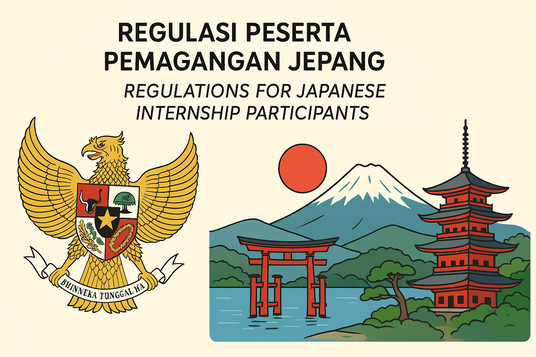
Regulations for Japanese Internship Participants
🏢 1. Legal Basis of the Japanese Internship Program
The Technical Intern Training Program is implemented based on:
-
Law No. 18 of 2017 concerning the Protection of Indonesian Migrant Workers.
-
Memorandum of Cooperation (MoC) between the Governments of Indonesia and Japan.
-
Technical Intern Training Act in Japan.
-
Regulations of the Indonesian Ministry of Manpower and the Organization for Technical Intern Training (OTIT) in Japan.
👤 2. Objectives of the Program
-
To provide opportunities for Indonesian citizens to learn Japanese technology, skills, and work ethics.
-
To enhance participants’ technical abilities for future contributions upon returning to Indonesia.
-
To strengthen human resource cooperation between Indonesia and Japan.
🧳 3. Participant Requirements
-
Indonesian citizen aged 18–30 years.
-
Physically and mentally healthy.
-
No criminal record.
-
Pass administrative screening, ability tests, interviews, and pre-departure training.
-
Sign internship contracts and agreements with the sending organization.
💼 4. Participant Rights
-
Receive technical training according to the job field.
-
Receive wages according to Japan’s minimum standard.
-
Receive housing and health insurance facilities.
-
Receive legal protection from OTIT and supervisory organizations.
-
Have the opportunity to extend the training period based on performance.
⚙️ 5. Participant Obligations
-
Comply with all work regulations, Japanese laws, and training contracts.
-
Maintain discipline, ethics, and the good name of Indonesia and the sending organization.
-
Avoid illegal acts such as running away, changing workplaces without permission, or committing crimes.
-
Participate in all training and skill evaluation activities.
-
Report to relevant authorities if facing problems at the workplace.
🕒 6. Program Duration
-
Level I (First Year): Basic training and work adaptation.
-
Level II–III (Second to Fifth Year): Advanced training and professional skill improvement.
-
Total duration: up to 5 years, depending on passing Japan’s National Skill Test (技能検定).
🏠 7. Facilities and Protection
-
Health insurance, labor insurance, and Japan’s national pension.
-
Housing and consultation support from the Supervising Organization (監理団体).
-
Assistance from OTIT Support Centers for participants in difficulty.
⚖️ 8. Sanctions for Violations
Participants violating the regulations may receive:
-
Official warning or reprimand.
-
Deduction of allowances.
-
Early repatriation to Indonesia before contract completion.
-
Legal reporting if proven to commit crimes.
🇯🇵 9. Post-Training (帰国後の支援)
After returning to Indonesia, participants:
-
Are encouraged to work in related industries.
-
May start businesses or continue careers domestically.
-
Are entitled to receive certificates of completion and skill assessments from Japan.
📋 10. Involved Institutions
-
Sending Organization (LPK): Handles training, documents, and participant assistance.
-
Supervising Organization (監理団体): Oversees internship implementation in Japan.
-
Accepting Company (受入企業): Provides on-the-job training according to the contract.
-
OTIT (Organization for Technical Intern Training): Official Japanese government body overseeing the entire program.